Fire-rated doors with Canadian certification labels
A rating that covers the whole opening.
QUIX Group supplies fire-rated doors for the openings in the fire separations of a building: suite entrances, exit stairs and service rooms. They are made in our group's own facilities in Turkey (TRIA), and each door carries a Canadian certification label from ULC, UL or Warnock Hersey.
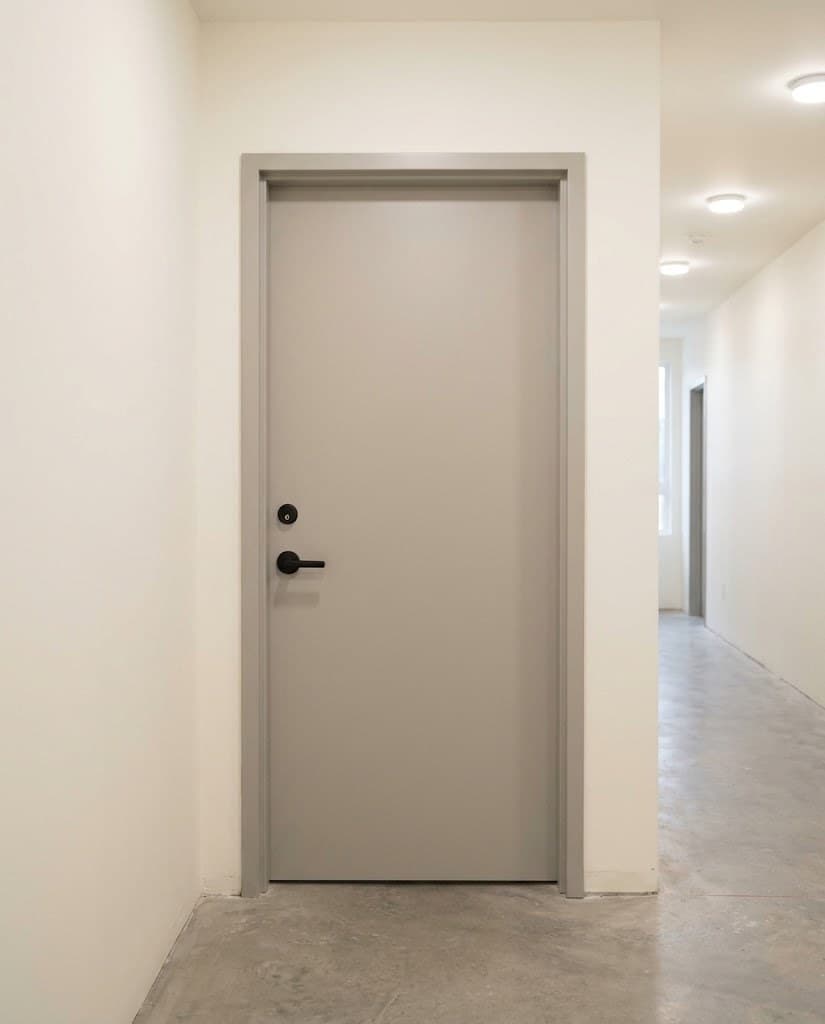 Inspiration AI-generated illustration
What it is
A door assembly with a fire-protection rating
A fire-rated door holds back fire for a set time in a standard test: its fire-protection rating, in minutes. In Canada the rating comes from the CAN/ULC-S104 fire test, and the door is installed to NFPA 80.
The rating covers the whole closure: the door, the frame, the hinges, the latch, the closer and the anchors. The label on the door states the rating.
Product sheet
Fire-rated doors
- Made by
- Our group's own facilities in Turkey (TRIA)
- Used in
- Openings in fire separations
- Labels
- ULC, UL or Warnock Hersey
- Rating
- Stated on the label of each door
- Documents
- Ask which documents exist for the product
Where it goes
Openings in fire separations
Fire separations divide a building into compartments, and each door in them is a rated closure, such as suite entrance doors and fire exit doors.
- Suite entrances
- Between each suite and the public corridor.
- Exit stairs
- Between each floor and the exit stair.
- Service rooms
- Service and storage rooms, where the drawings show a fire separation.
- Corridor separations
- Doors across a corridor, where a fire separation divides it.
Code notes
What the code asks of a fire-rated door
The designer of record sets the rating of each opening. These rules apply to the door that fills it.
Tested to CAN/ULC-S104
The fire-protection rating of a door is determined by the CAN/ULC-S104 fire test (Article 3.1.8.4).
Installed to NFPA 80
Rated doors are installed in conformance with NFPA 80, with the clearances the code allows around the door (Article 3.1.8.5).
Self-closing and latching
Doors in fire separations need a self-closing device and a positive latch; a hold-open device must release on a fire alarm or smoke detector signal (Articles 3.1.8.13 to 3.1.8.15).
Temperature rise at stairs
In buildings over three storeys, a door between an exit stair and the floor area must limit the temperature rise on its unexposed side (Article 3.1.8.17).
Labels stay legible
A label must not be painted over or removed, and cutting or drilling a door on site can void its listing (NFPA 80).
These notes follow the 2024 Manitoba Building Code, which adopts the National Building Code of Canada 2020 with Manitoba amendments, as checked in October 2026. Article numbers are those of that code; none of the cited articles is amended in Manitoba. The designer of record and the authority having jurisdiction decide what each project needs.
What buyers ask for
What to confirm on each fire-rated door
The points a specifier or an inspector checks on a rated opening.
Rating in minutes
The fire-protection rating each opening needs, from the designer of record.
Agency and listing
The certification agency on the label and the listing that covers the door and the frame.
Temperature rise
A temperature rise statement on the label, for stair doors in buildings over three storeys.
Smoke and draft
A leakage-rated assembly to UL 1784, where the code asks for one.
Vision lites
Glazing within the size that the listing and the code allow.
Listed hardware
The hinges, latches and closers the assembly is listed with.
Honest notes
Ratings and labels, plainly
Each fire-rated door we supply carries a Canadian certification label from ULC, UL or Warnock Hersey that states its rating. We list no ratings in minutes on this page until each listing is confirmed. Ask for the label details of the door you need.
Ask for documentsAsk us about
- Label details: agency and rating
- Product data for the door and frame
- The hardware the assembly is listed with
Not published yet
- Ratings in minutes
- Temperature rise and smoke ratings
Questions about fire-rated doors
What does a fire rating on a door mean?
A door's fire-protection rating is the time, in minutes, that it held back flame in a standard fire test, CAN/ULC-S104 in Canada. The rating belongs to the whole assembly: door, frame, hardware, closer and anchors. The label on the door states it.
Which labels do your fire-rated doors carry?
Each fire-rated door QUIX Group supplies carries a Canadian certification label from ULC, UL or Warnock Hersey that states its rating. On a listed door the label typically sits on the hinge edge, in the top third of the door, and it must never be painted over or removed. Ask for the label details of the door you need before you order.
Can a fire-rated door be cut or drilled on site?
Cutting, drilling or adding a vision kit on site can void a fire-rated door's listing, because the label is applied after the door is prepared at a listed facility. Ask the listing agency or the authority having jurisdiction before any change.
Do fire-rated doors need closers?
Doors in fire separations need a self-closing device, with a few exceptions the code lists, and a latch that holds them closed. A door may be held open only by a device that releases it on a fire alarm or smoke detector signal.
Can a fire-rated door have glass?
A fire-rated door can have a vision lite when the glazing is covered by its listing. Doors that must limit temperature rise, such as stair doors in buildings over three storeys, keep the glazing to 0.0645 m² at most.
Who decides the rating a door needs?
The designer of record sets the rating of each opening on the drawings, following the building code, and the authority having jurisdiction reviews it. In Winnipeg that code is the 2024 Manitoba Building Code, based on the National Building Code of Canada 2020.
Construction materials
The other products
Specifying fire-rated doors for a project?
Send the door schedule with the rating of each opening. We reply with the labelled doors our production can supply.