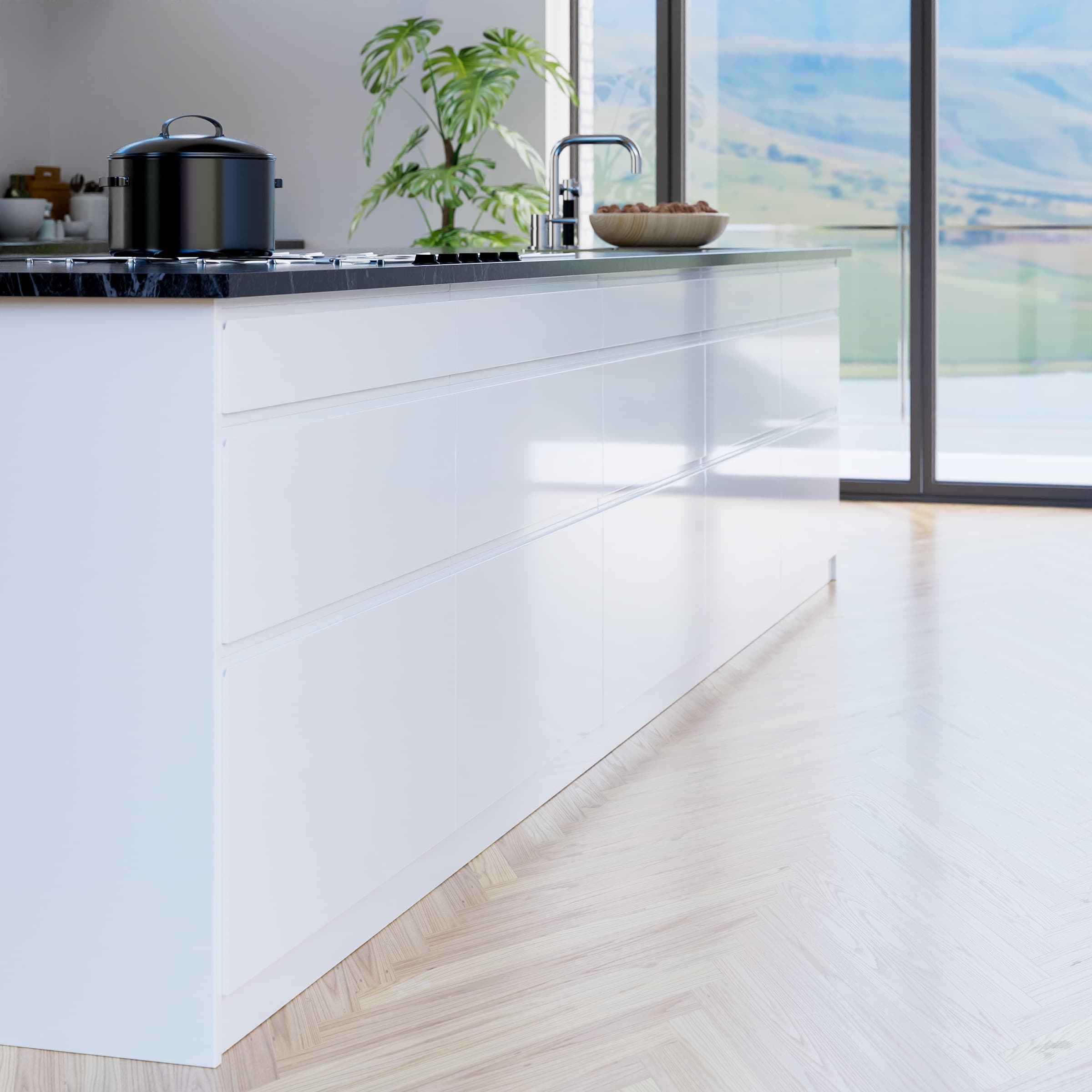
Slab
- Construction
- One flat panel with no frame or profile.
- Look
- Flat and quiet, with or without handles.
- Suits
- Modern kitchens, long runs and handleless designs.
- Care
- A soft cloth, water and a mild detergent.
First the door, then the finish.
Our kitchen cabinets come with four door styles: slab, shaker, thermofoil and wood. They differ in how the door is built and what its face is made of, and that decides the look, where the door suits and how to care for it.
Four styles
At a glance
The same four questions for each door: how it is built, how it looks, where it suits and what care it asks for.
Materials
Most doors are a core board with a decorative face. These are the boards and faces behind our four door styles, explained plainly.
Medium-density fibreboard: wood fibres bound with resin and pressed into a smooth, even panel. It machines cleanly, so profiled doors are often MDF, and it is made for indoor use, away from standing water.
High-density fibreboard: the same fibres and resin as MDF, pressed to a higher density for a harder, smoother panel.
Also called chipboard: wood particles bonded with resin under pressure. With a melamine face it is a common core for cabinet boxes and for slab doors.
A decor paper soaked in resin and fused to a board under heat and pressure, also called thermally fused laminate. It comes in plain colours and wood grains.
A vinyl film bonded to MDF. Laid flat on a board it faces a slab door; heated and vacuum-formed over a shaped door, it is thermofoil.
A polyester film laminated to MDF, often in high gloss. Boards like this are cut to size and closed with edge banding.
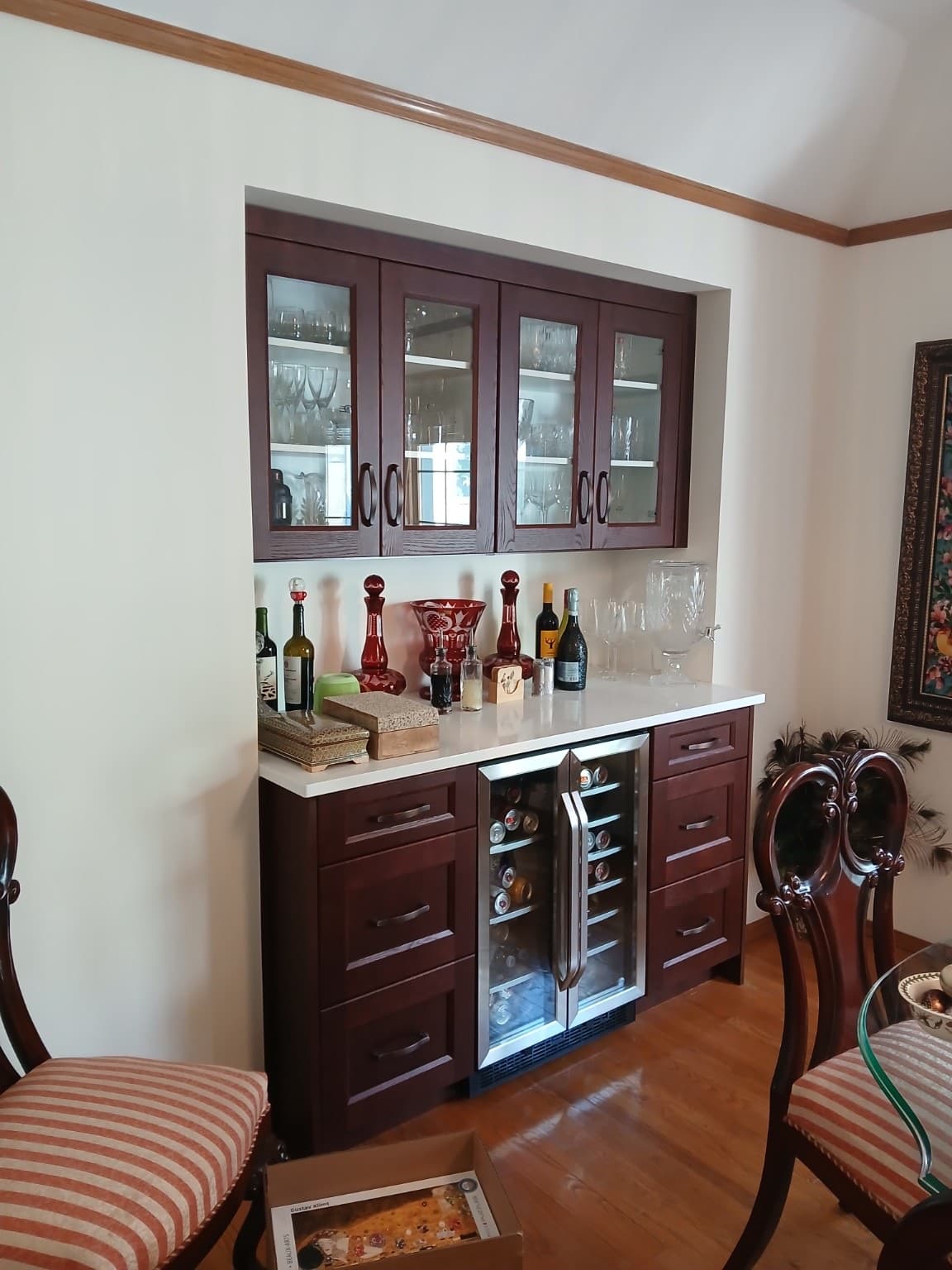
Solid wood is cut from the timber itself; veneer is a slice of wood as thin as 0.64 mm, glued onto a core panel. Both show real grain.
A strip glued along the cut edge of a panel to close and finish it. In our workshop it is applied on a NOTE 601N edge bander.
The four door styles QUIX Group offers are slab, shaker, thermofoil and wood. Slab and shaker describe the shape of the door, thermofoil and wood what it is made of, so they can overlap, as in a wood shaker door.
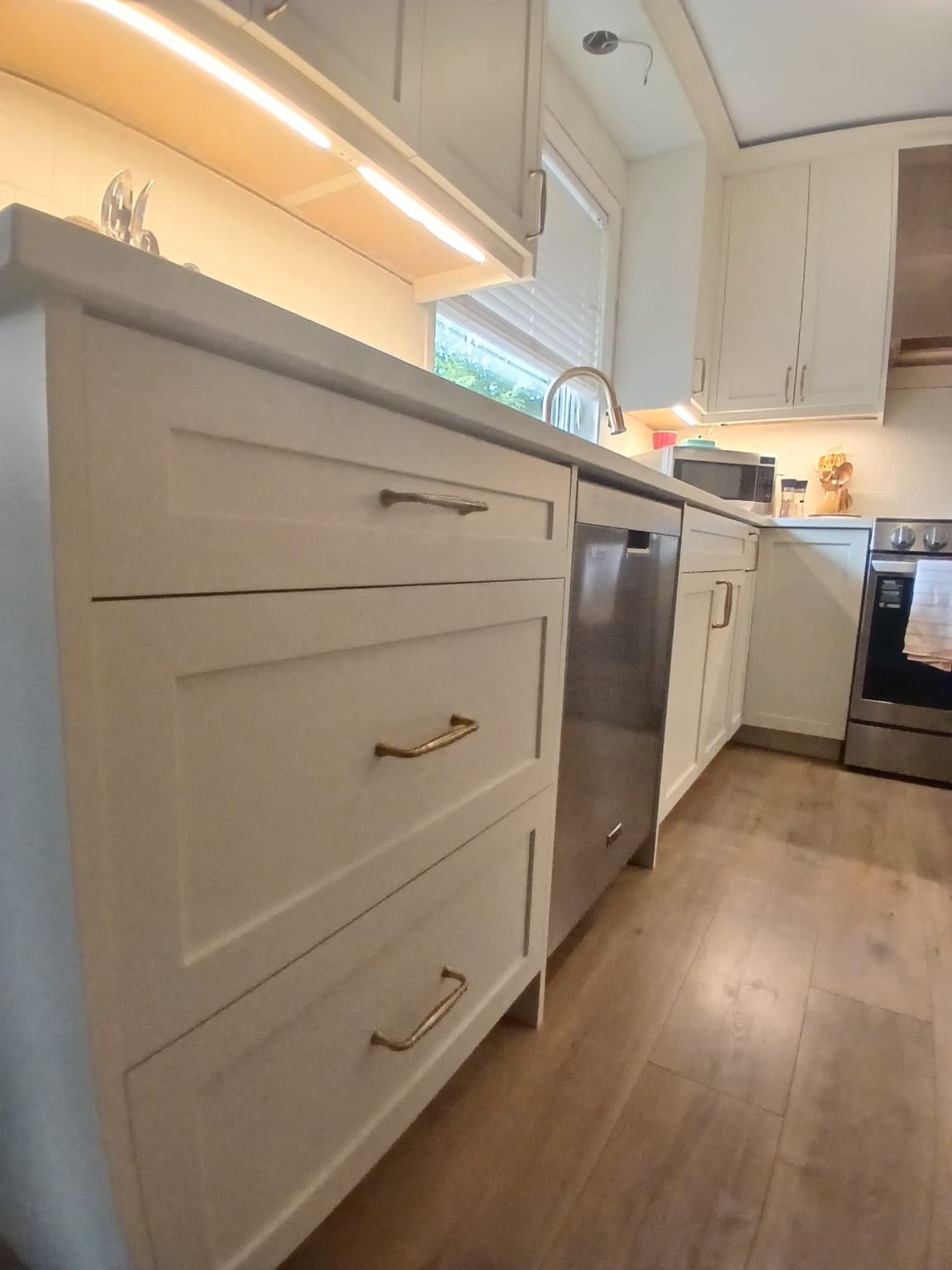
A slab door is one flat panel with no frame, while a shaker door sets a flat centre panel inside a frame. The slab reads plain and modern; the frame of a shaker door gives a classic outline.
Most kitchen cabinet doors are a core board with a decorative face: MDF or particleboard faced with melamine, a PVC or PET film, or a real wood veneer. Solid wood doors are the exception, cut from timber rather than faced.
Flat faces are the quickest to wipe, so slab and plain thermofoil doors take the least time to clean. A shaker door has inside corners where the frame meets the panel, and a wood door wants a dry cloth and spills wiped at once.
A slab door in a light high gloss finish reflects the room and its light, which helps a small kitchen feel open. If you prefer a frame, a slim shaker frame keeps a short run from looking busy.
Tell us about the room and how it is used, and we will suggest a door style and a finish with your quote.